The payment that arrived first
Most supply agreements are announced with a headline number and a delivery schedule. This one came with a receipt. On 20 July 2026 Prysmian announced a ten-year agreement to supply optical cable to Molex, the Koch Industries connectivity business, worth up to 5.5 billion euros, and disclosed that 550 million euros of it had been paid upfront. Molex confirmed the agreement the same day.
An upfront payment of that size is unusual enough to be the story. A customer does not hand over half a billion euros a decade ahead of delivery to secure a better unit price. It does so to secure the delivery itself. Massimo Battaini, chief executive of Prysmian, called the moment transformative for the group's Digital Solutions business, and Joe Nelligan, chief executive of Molex, framed it as a way to better support shared customers. Both statements are true, and neither says the interesting part out loud.
What a decade of committed demand does to a queue
Cable is not the constraint. Slots are. Optical fibre and cable are made on lines with finite annual output, and those lines get booked. When one buyer contracts ten years of output and pre-pays a tranche of it, the effect on everyone else is not that the product costs more. It is that the calendar moved. A buyer arriving in 2027 with an ordinary purchase order is no longer negotiating price against a supplier holding spare capacity. It is asking to be fitted around commitments already signed and partly paid.
Prysmian put the wider picture in the same release. Its accumulated data centre agreements are expected to generate more than 10 billion euros of incremental revenue through 2035, and as much as 1.1 billion euros a year from 2031. Those are not forecasts of market demand. They are contracted positions. For a European operator the useful reading is that a meaningful share of the continent's largest cable maker's next decade is already spoken for by named counterparties.
The plants are going where the contract is
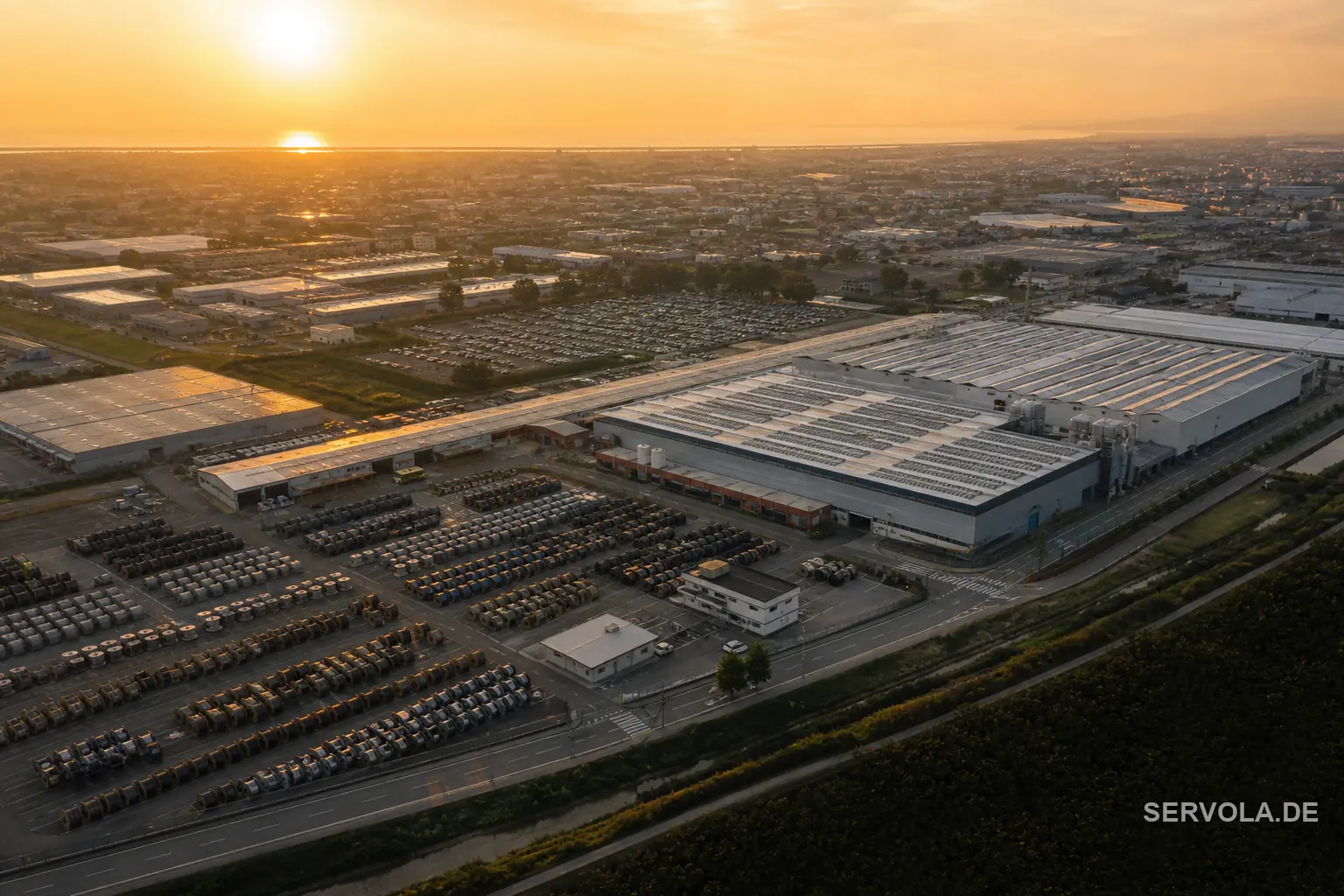
The second half of the announcement is where the money lands. Prysmian committed 1.25 billion euros of capital expenditure through 2031 to more than double its optical fibre and cable capacity in the United States, creating over 1,000 roles worldwide of which 600 are in US manufacturing. That is a European industrial group financing its AI decade by building the new lines next to the customer that contracted for them.
The allocation is rational and it is also a fact about European lead times. New capacity built in the United States against American demand does not relieve a queue in Frankfurt, Dublin or Milan. European buyers will still be served, from European plants, on European schedules, but the marginal expansion of the group's output is being sited elsewhere. Anyone modelling European fibre availability through 2031 should model it without assuming the new capacity is fungible.
What to do with this before your next build
Turn it into two questions for your supplier this quarter, both in writing. What is the committed lead time for the volume in my plan, and what volume are you willing to commit to at that date. A quotation answers neither. The Prysmian and Molex agreement is a public demonstration that large buyers are converting forecasts into contracts, and a forecast that has not been converted competes against contracts that have.
The wider lesson is that the AI build-out has moved past the chip. Cable, transformers, switchgear and cooling are all industries with long lines and short queues, and they are being locked in decade-length blocks by counterparties who can pay in advance. The owner who treats physical supply as a procurement afterthought will find that the schedule slipped, not the invoice.
Read next: Apple Locks Its Custom Chips Through 2031 | Ford and GM Lock Memory Supply Direct With Micron