Ten thousand chips, none of them American
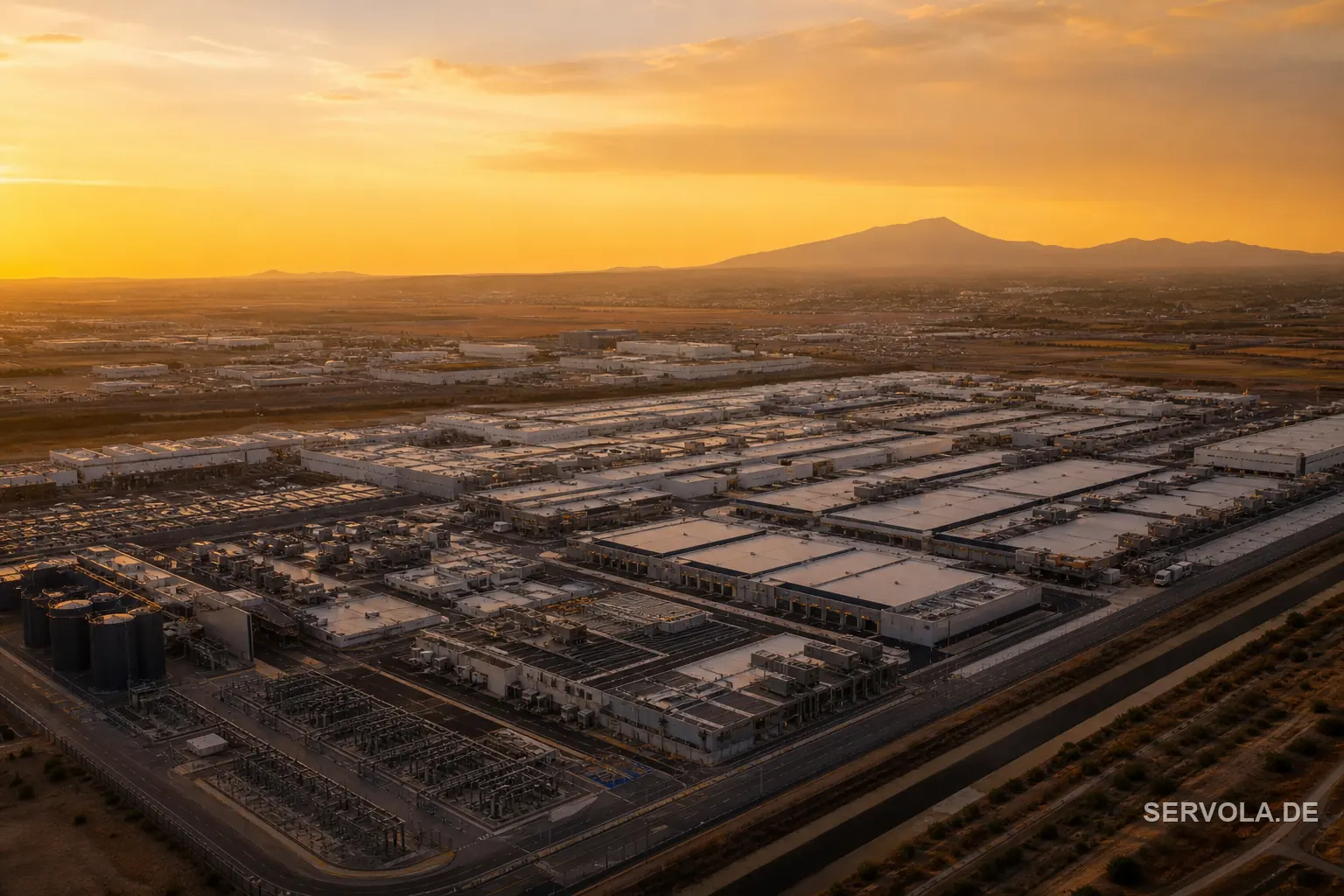
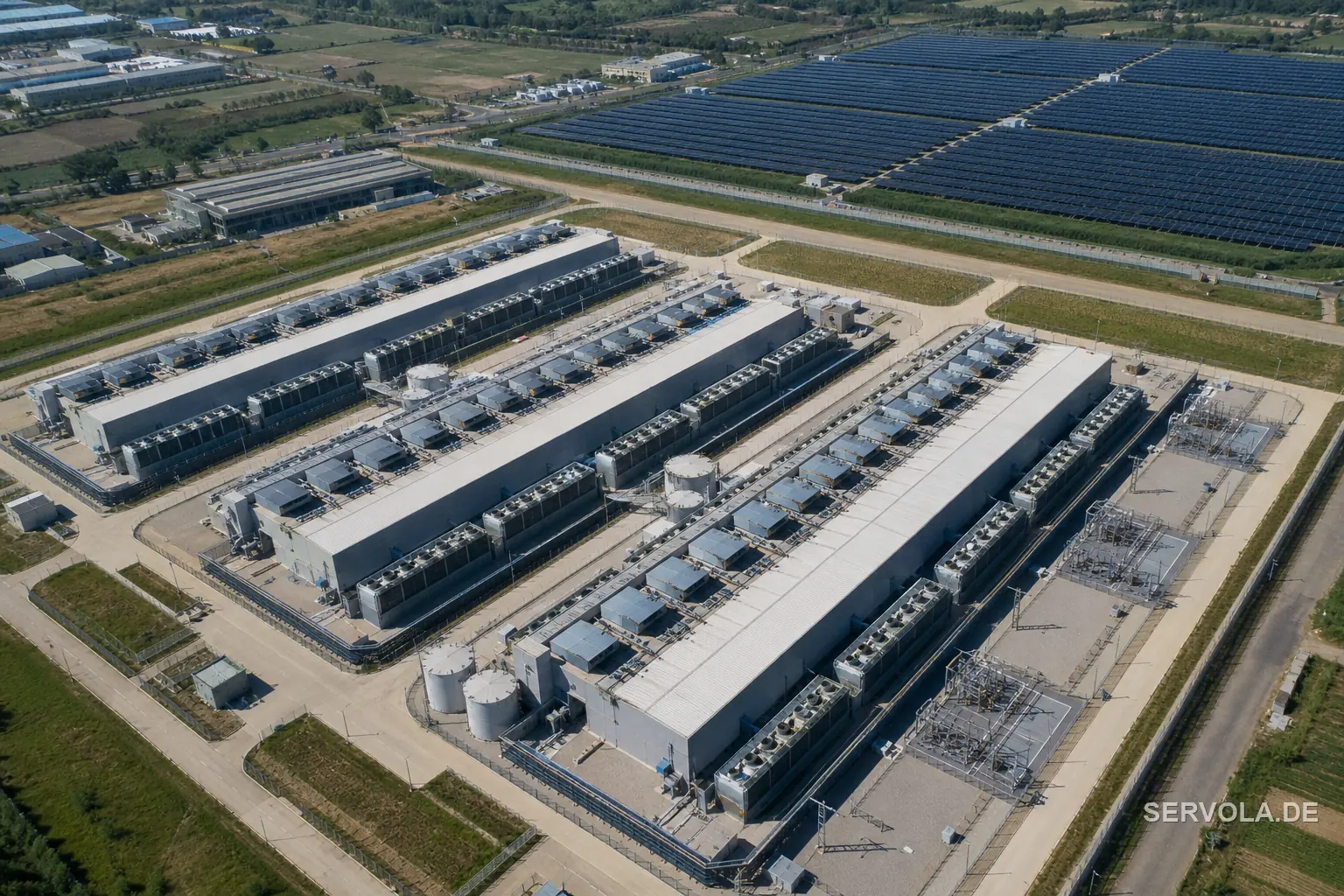
Z.ai, the Chinese laboratory previously known as Zhipu and the developer of the GLM model family, has finished building a data centre in the gigawatt class and switched part of it on. The facility runs on more than ten thousand domestically manufactured semiconductors and, according to the reporting, not one Nvidia part. It is described as the largest server facility built by a Chinese AI company, and Z.ai now operates several clusters each exceeding ten thousand chips.
The claim that matters is the exclusivity, not the size. Chinese firms have been assembling large clusters for years, generally with a mixture of stockpiled Nvidia hardware, export-compliant variants and domestic accelerators. A build with no American silicon in it at all is a different statement. It says the domestic supply chain, from accelerator to interconnect to the software that drives them, is complete enough to stand up a frontier-scale training site without a licence from Washington.
Context sits behind it. China has committed roughly 2 trillion yuan, about 295 billion dollars or 273 billion euros, to national data-centre construction over five years. This facility is one instance of that programme reaching operational status rather than announcement status, and operational status is the only kind that changes anyone's options.
The acquisition that matters more than the building
On the same day, Z.ai completed the purchase of Zhongke Jiahe, an AI infrastructure software company founded by researchers from the Chinese Academy of Sciences. Its technology does something narrow and load-bearing: it runs the same model efficiently across different Chinese-made accelerators, including Huawei and Cambricon designs.
That is the actual bottleneck, and it is not a hardware problem. The reason a decade of Nvidia alternatives failed to displace anything was rarely raw silicon performance. It was that every workload had to be ported, tuned and maintained per architecture, and the porting cost exceeded the hardware saving. A domestic build using two or three different accelerator families multiplies that problem rather than escaping it.
Z.ai did not attempt to solve it in-house. It bought a team from the Academy of Sciences that had already solved it, and closed on the same day it announced the site. Read the sequencing as intent. A company confident it could paper over heterogeneous hardware with internal engineering does not acquire the capability at the moment it needs it. The purchase is an admission of how hard the layer is, and simultaneously the reason the gigawatt is usable at all.
A gigawatt buys less than it sounds like, and that is the point
One gigawatt is approximately the instantaneous draw of 750,000 homes. Stated that way it sounds decisive, and for a European reader it is worth translating into the currency that actually constrains us. It is not chips. It is grid connection.
Domestic Chinese accelerators generally deliver less compute per watt than the Nvidia parts they replace. So a gigawatt of Huawei and Cambricon silicon does not buy a gigawatt of Nvidia-equivalent training throughput. It buys meaningfully less. The strategy only works if you can put more power behind the same result, and Beijing can, because grid capacity and generation build-out are the inputs China has in surplus.
Europe is on the other side of that trade. Connection queues in the Netherlands, Germany, Ireland and the United Kingdom are measured in years, not months, and the binding constraint on European AI capacity has not been chips for some time. This is why the announcement should be read as an energy story wearing a semiconductor jacket. A competitor that can pay for inefficiency with electricity is playing a game a European operator cannot copy, whatever hardware becomes available.
What this does to a model already in your stack
GLM models are open-weight, and a considerable number of European firms are running them in production, often as the cost-controlled tier underneath a frontier model. For those firms the practical question has always been supply durability: if export controls tighten, does the thing I built on stop being maintained.
The answer just changed shape rather than improving. A domestic compute base makes continued development of these models far less dependent on American licensing decisions, which removes one failure mode. But the same self-sufficiency is precisely what makes the models worth controlling from the other end. Chinese regulators have been consulting domestic AI and chipmaking firms on tighter export rules covering advanced models and the technology behind them, a direction reported this week and not yet enacted.
So the risk did not disappear. It moved, and it doubled. A model that used to face one export-control regime now sits between two, and the two are not coordinated. For an architecture decision with a five-year horizon, that is a materially different picture from the one most European AI risk registers currently contain.
Mirror the weights, then write down which regime applies
Two actions, both cheap, both this quarter. First, for every open-weight Chinese model you run in production, mirror the weights to storage you control, in your own jurisdiction, with a recorded hash. Open weights you have downloaded are durable regardless of what any government decides later. Open weights you are pulling from a hosted repository on demand are a dependency wearing the costume of an asset.
Second, add one field to your model inventory: which export-control regime governs this. Most inventories record licence, parameter count and hosting location. Almost none record jurisdiction of control, because until recently there was only one plausible answer. There are now two, they can tighten independently, and a model can become unavailable through either without the other doing anything.
Nothing here calls for switching vendors or abandoning Chinese open weights. The cost advantage that put them in your stack is real and it is not going away, if anything a domestic compute base makes it more durable. The point is narrower. You are now depending on an artefact whose continued availability is a matter of policy in two capitals, and the mitigation costs a storage bucket and a spreadsheet column.
Read next: Even a Trillion-Dollar Lab Must Rent Its Compute | The Nvidia Tax Just Found a Second Source